This summer, i was delighted to be interviewed by the Sarabande Foundation for their annual manifesto, reflecting on my 12-month studio residency and months that followed. They've kindly given me permission to share the interview here.
Founded by the late Lee Alexander McQueen in 2006, Sarabande supports emerging artists and designers through studio residencies, scholarships and mentoring.
This time last year, I was nearing the end of my residency and so it feels fitting to be able to share this with you a year on.
Meet Adele Brydges
A lot can happen in a year. For Adele Brydges, it was a complete reinvention. Working with clay, ritual and sensuality as pathways into connection, her practice sits somewhere between sculpture and ceremony, exploring our relationship with ourselves, one another and the natural world. Since joining Sarabande, her practice has undergone a profound transformation, expanding intimacy beyond the body and into our relationship with place.
Artist Story
For years, Adele was known for her ceramic pleasure tools; beautiful, intimate objects that explored sexuality through craft. During her time at Sarabande, however, something shifted. Rather than refining an already successful practice, Adele chose to dismantle it altogether. ‘I used to make pleasure tools,’ Adele says. ‘But people don’t need more things, they need more connection.’
Closing her business wasn’t an ending so much as permission to begin again. The residency gave Adele the freedom to strip away expectation and ask herself, ‘Who are you without all of those other things? What would you create if you didn’t have any of those pressures?’ The answer became a new body of work rooted in landscape, ritual and ecology, expanding intimacy beyond the body and into our relationship with place.
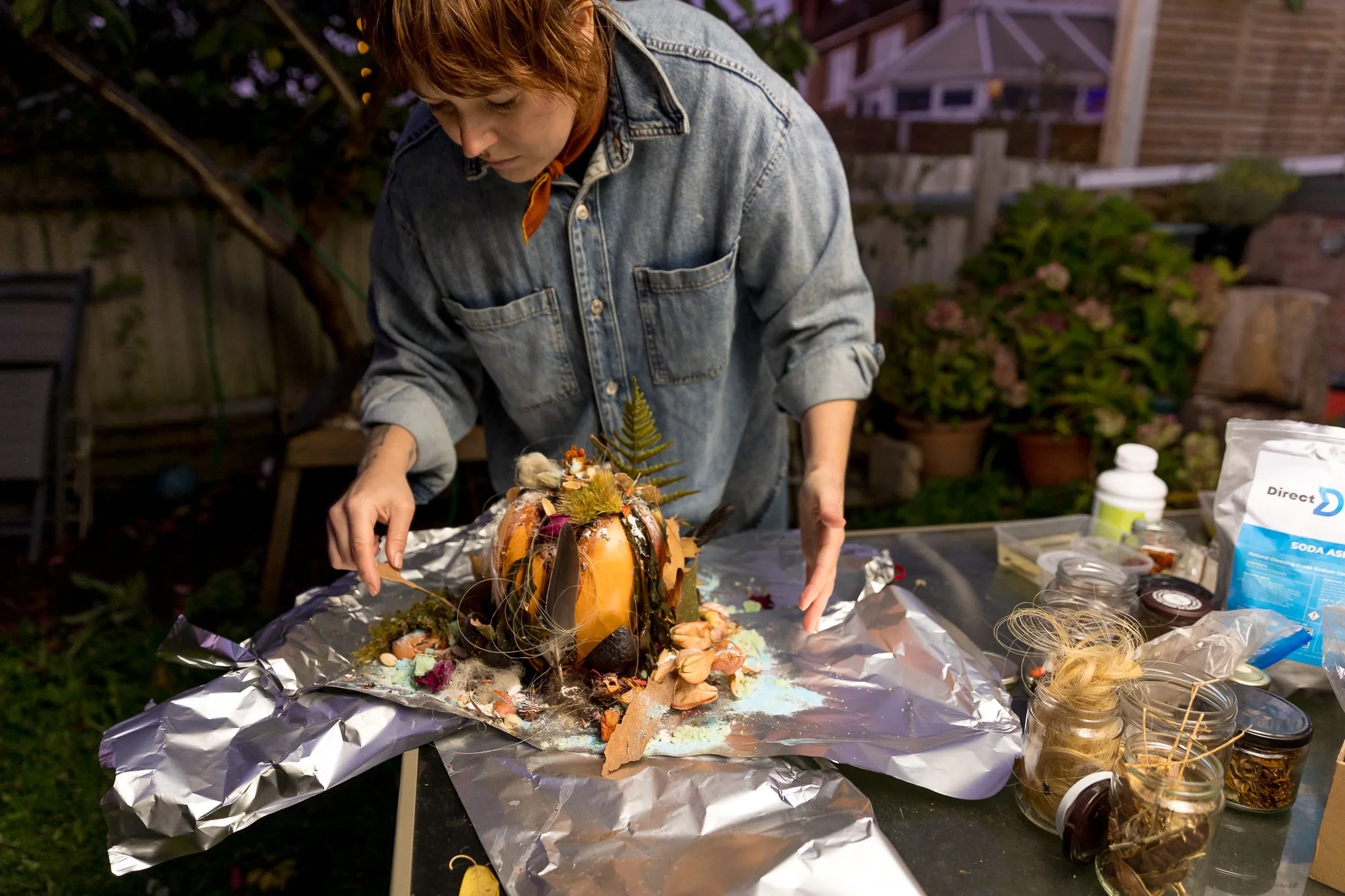
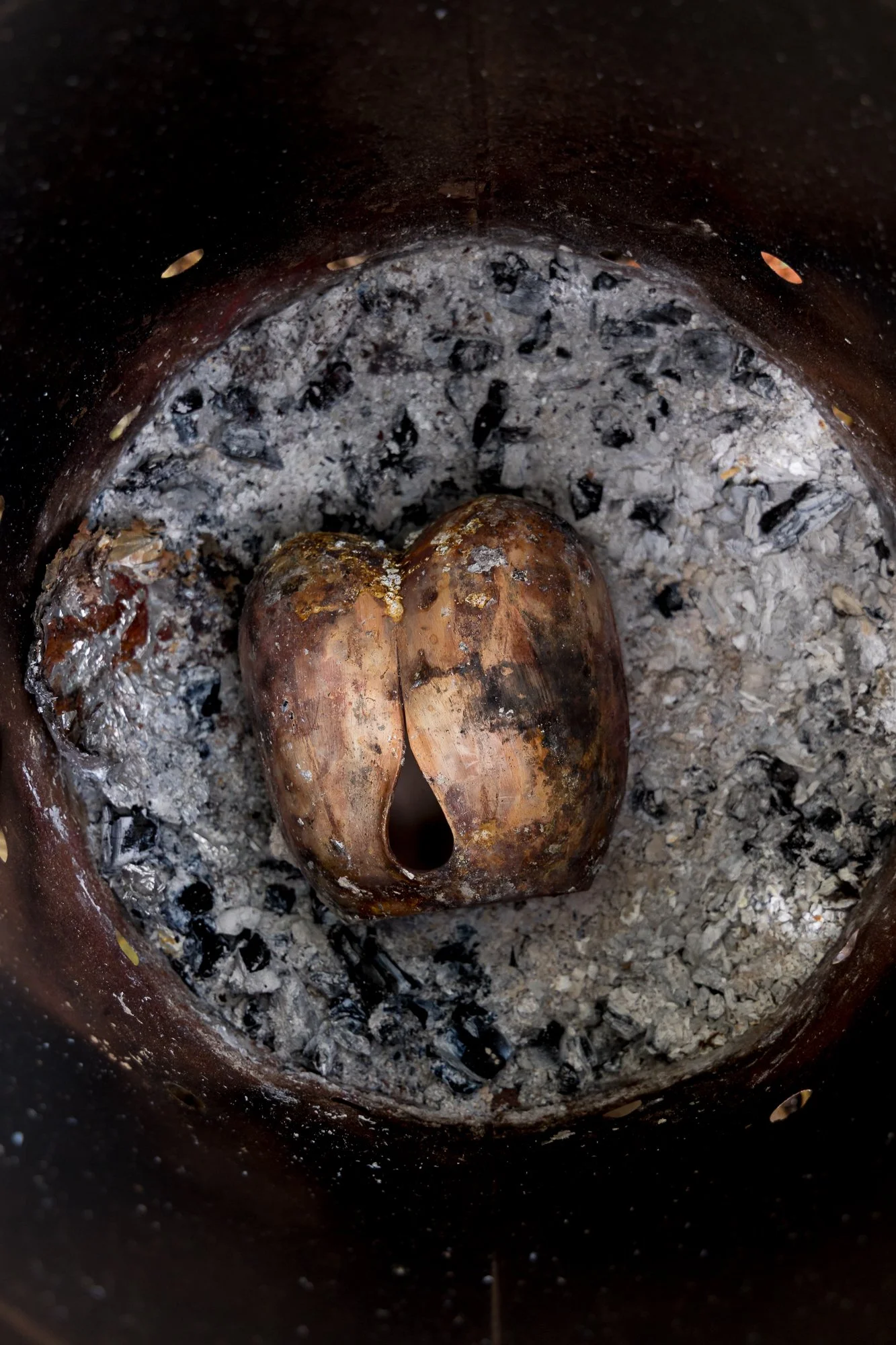
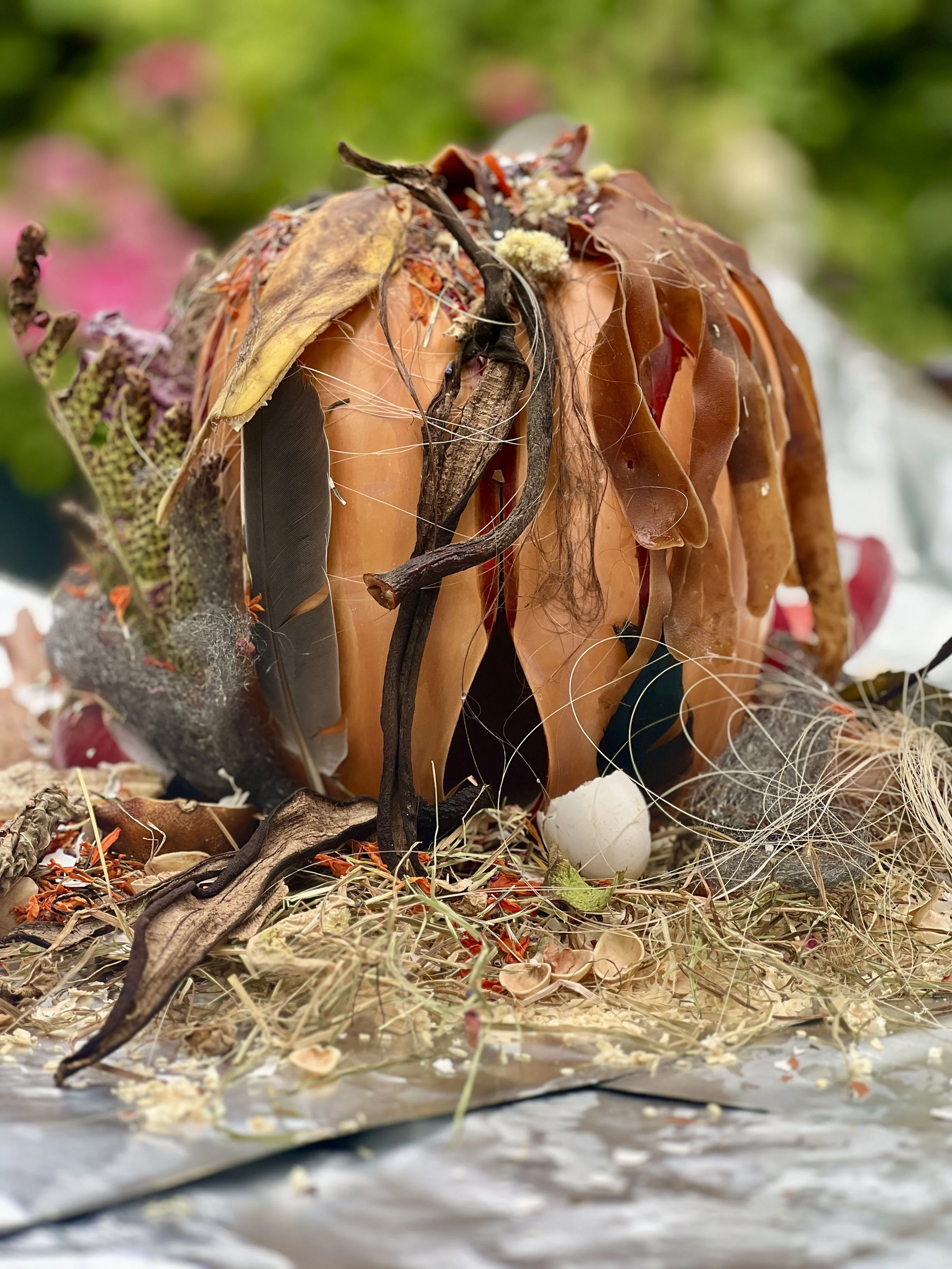
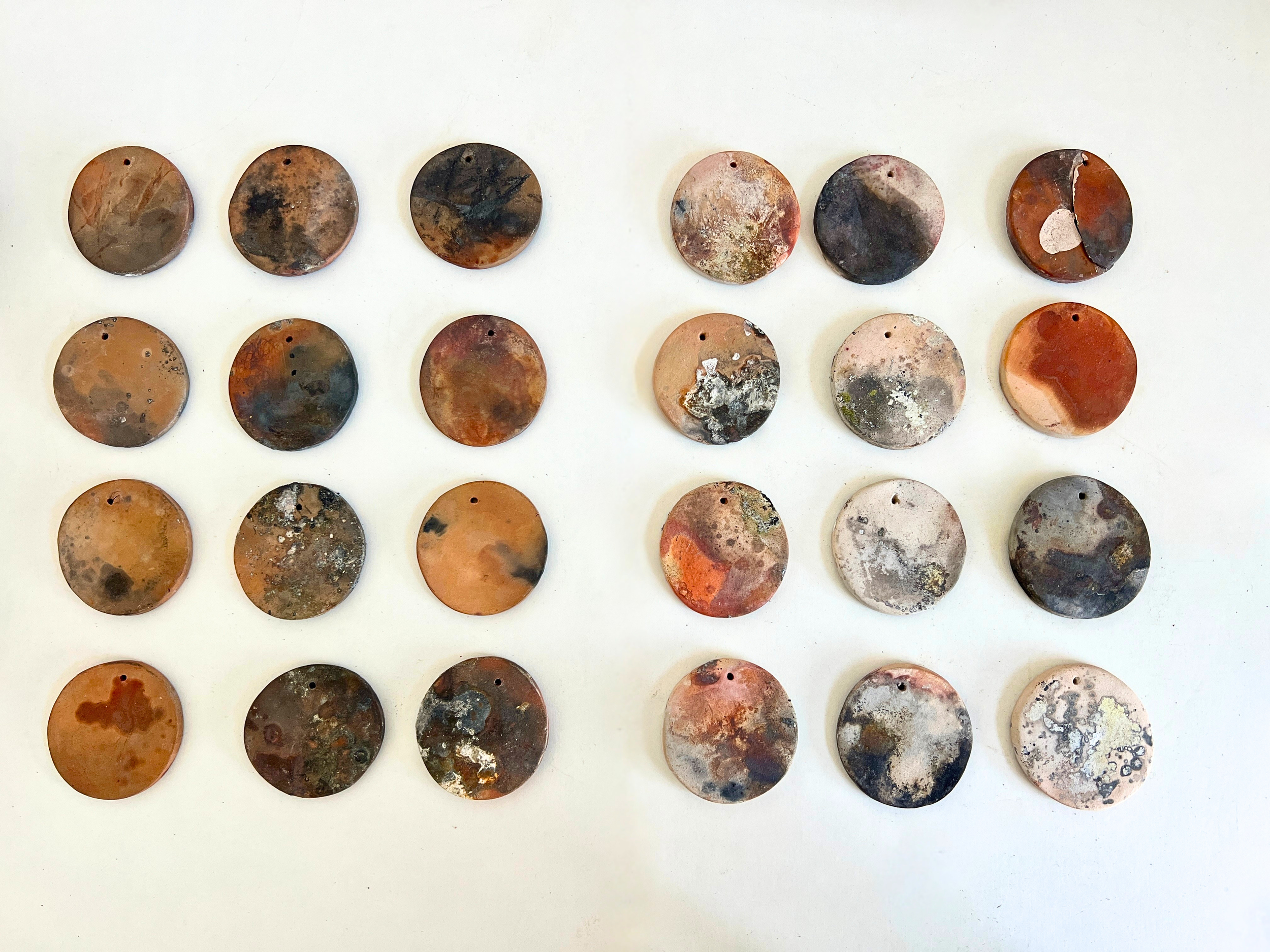
Today, Adele gathers what nature has already discarded; fallen leaves, flowers, seeds and botanical ash, embedding traces of the landscape into clay before transforming them through saggar and barrel firing. ‘Go to a place and look at nature not as something to extract from,’ she says, ‘but something to work alongside.’ Fire has become as important as clay itself. ‘There’s an element of having to let it be what it’s going to be,’ she says, embracing a process where control is shared with the materials themselves.
The new body of work quickly found a life beyond the studio. Through House of Bandits, Sarabande’s gallery, her new barrel-fired works have travelled from Collect art fair 2026 to Selfridges (during our three-month residency), Echo Soho and The Roof Gardens. This new direction also led to a commission from the Barbican Centre to conceive and lead Embodied Connections, a sensorial workshop exploring intimacy through the senses, before returning as a keynote panellist discussing intimacy and censorship.
The work wasn’t the only thing Adele left Sarabande with. Perhaps the most lasting part of the residency has been the community it fostered. After sharing a studio throughout the programme, Adele and fellow resident Beverley Duckworth now continue to work alongside one another in a studio of their own, a friendship and creative partnership that has outlived the residency itself.
Now developing a debut solo exhibition exploring grief, wildness and collective ritual, Adele continues to build a practice that is slower, more instinctive and deeply connected to the world around her.
Your practice has evolved quite dramatically over the past year. What sparked that shift?
My work used to focus on intimacy through the lens of pleasure and the objects I made. Over time that idea of connection expanded. Now I’m interested in our relationship with place, with the land and with the natural world. I gather materials that nature has already discarded - fallen leaves, seeds, flowers - and use them to capture the essence of a place within an object. It’s become much more about emotional responses than creating a polished product. I realised people don’t need more things; they need more connection.
You closed your business making ceramic pleasure tools. Was that a difficult decision?
It was something I’d been thinking about for years. I was frightened because I didn’t know what would come next, but the residency gave me the space to explore that uncertainty without the pressure of constantly making work to sell. Closing that chapter felt incredibly liberating. My practice is much more experimental now. I’m following ideas rather than products, and trusting that the work will eventually connect with people on a deeper level.
Nature feels central to your current work... not just as subject matter, but as collaborator.
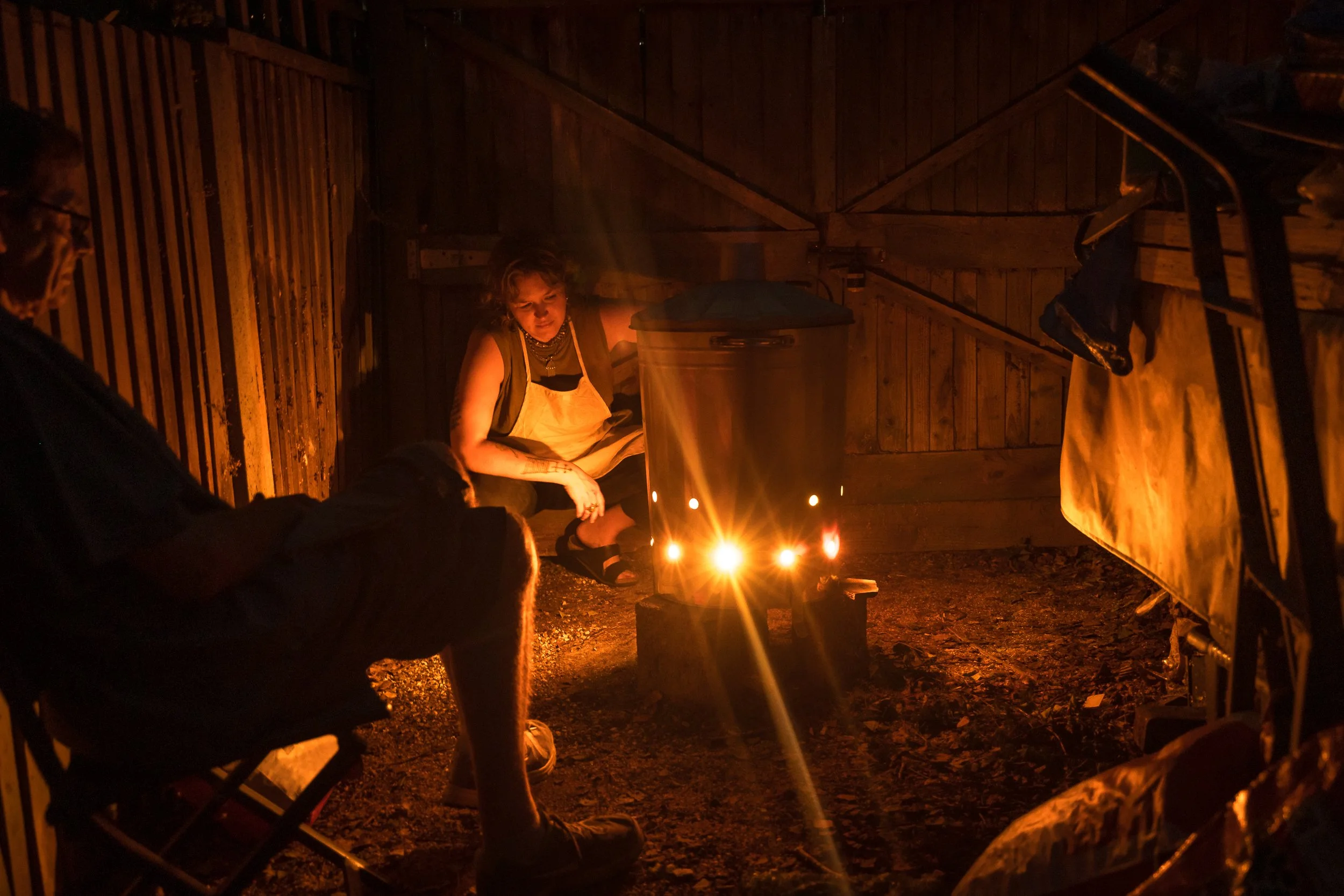
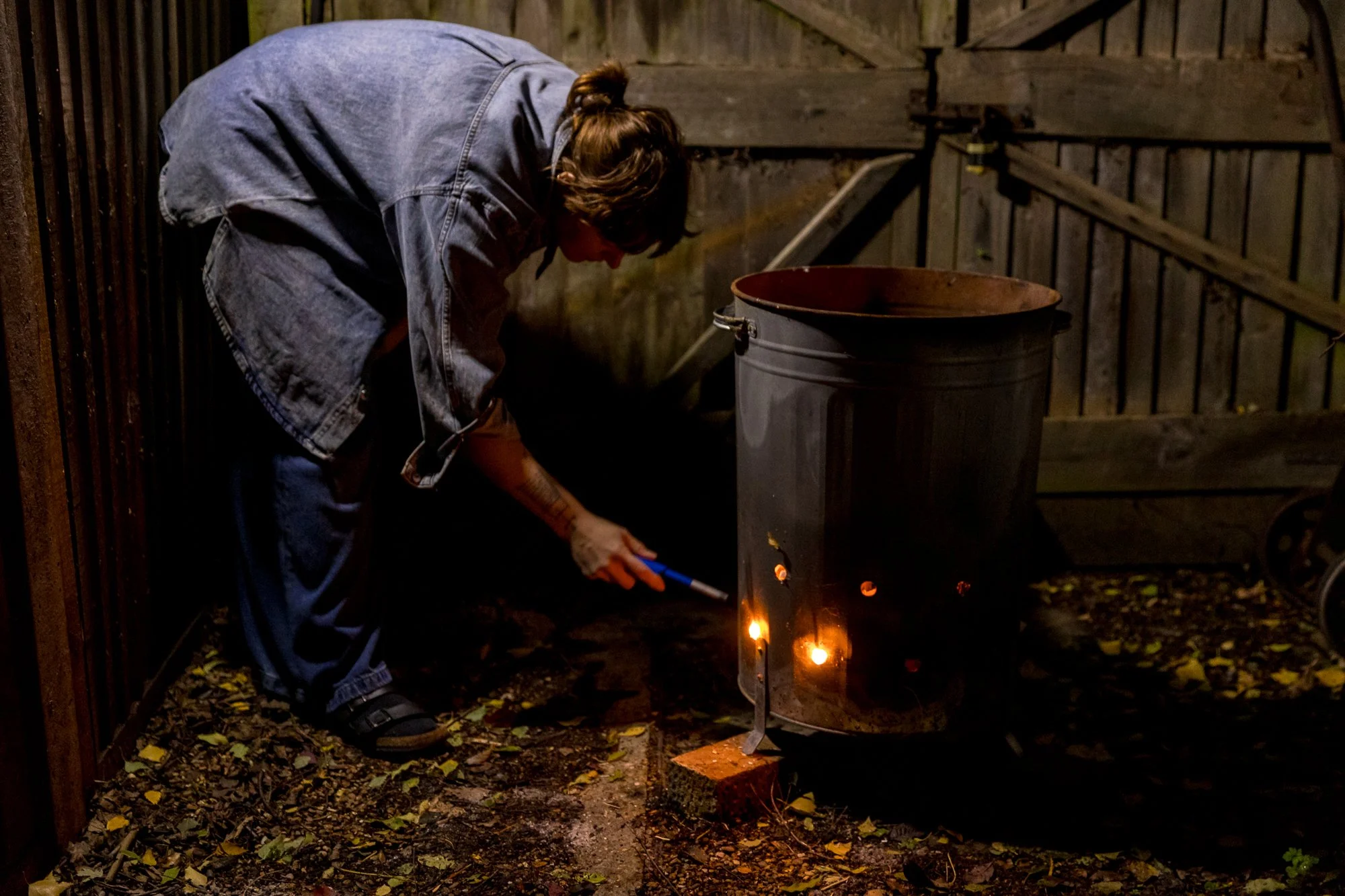
Absolutely. Rather than imposing an idea onto materials, I’ve had to relearn how to be guided by them. My practice has become much more elemental. I work with raw materials that aren’t heavily processed, and I’ve moved away from electric kilns towards barrel firing using wood and charcoal. There’s an element of relinquishing control. You can prepare everything, but the fire still has its own language. You have to sit with it, respond to it, and accept that every firing is different. That process has become almost ritualistic. Friends and family gather around the fire, people come and go, conversations happen. The making becomes shared experience rather than something isolated.
There’s a strong sense of folklore and ritual in your work. Where does that come from?
I grew up in an Irish Catholic family where storytelling, mythology and rituals around nature were part of everyday life. My grandmother would collect pine cones, flowers and natural objects to place on a small altar at home. Looking back, I realised I’m collecting things in exactly the same way now. I’m interested in rediscovering that sense of wonder that can disappear in modern life. If you really pay attention, nature is full of extraordinary moments. My work tries to preserve something of that feeling.
How has your time at Sarabande changed your practice?
It changed everything. Financially it gave me the freedom to focus on making rather than surviving, but more importantly it shifted how I saw myself. I’d always thought of myself as a designer, even though the work I wanted to make had grown beyond that. Conversations with mentors and being surrounded by artists who approached their practices in completely different ways gave me permission to embrace being an artist. It also reminded me that there isn’t one correct way to have a creative practice. That confidence has fundamentally changed how I work.
What are you working towards now?
I’m developing a body of work for a solo exhibition, bringing together ceramics, installation and other materials. The work continues to explore ideas of land, ecology and intimacy, but on a much larger scale. More than anything, I’m allowing myself to experiment. Instead of waiting for every concept to be fully formed, I’m simply making - following ideas, seeing where they lead, and trusting the process.
Three words that describe your practice?
Foraged. Embodied. Elemental.
***
If you’d like to see work in person, I’m showing in GOOD DIRT, 20 to 22 November at 259 Kingsland Rd, E2.
Sign up to the newsletter for more event details and upcoming workshop dates.